Day of week------
Natural Time
Natural Time Overview
Sun
Sunrise--
Sunset--
Sun direction--
Sun angle--
Highest today--
Moon
Moonrise--
Moonset--
Moon direction--
Moon angle--
Next full moon--
Morning
Afternoon
Night
Late Night
Moonrise
Highest
Moonset
Lowest
Current Location
, , ,
Permission
required
required
Approximate
location
location
Day Phases
Follow the changing phases of daylight and darkness.
--
--
Local Weather
Detecting area...
--° F
--
Today's High:
64° F
Low:
53° F
Temp Category:
Mild
Humidity:
--
Elevation:--
Distance to coast:--
Climate type:
--
Landscape type:
--
Monthly rainfall:--
Yearly rainfall:--
Category:--
Monthly snowfall:--
Yearly snowfall:--
Category:--
Wind:--
Wind speed:--
Pressure:-- / --
Traffic
Loading traffic phase
Estimated daily traffic intensity by time of day. Green is low traffic, yellow is medium traffic, and red is high traffic.
Late night12am-5am
Early commute5am-7am
Morning rush7am-9am
Late morning9am-11am
Midday11am-3pm
Build-up3pm-4pm
Evening rush4pm-7pm
Evening7pm-9pm
Night9pm-12am
12a
3a
6a
8a
10a
12p
3p
5p
7p
10p
Low
Medium
High
Day/Night Cycle
--
--
Day Phases
Current Phase
--
Sun Angle
Current Sun Angle--
Current Sun Position--
Today's Highest Sun Angle--
Current Solar Declination--
Day Length--
Season--
Day length--
Latitude--
--
--
--
--
Current Meal:--
--
Current Drink:--
--
NATURAL TIME FOUNDATIONS
Day Information
Explore what “day” means in the sky and on a clock.
Show Day InformationHide Day Information
The Sun's Daily Cycle
From a location on Earth, the Sun appears to cross the sky each day. Daylight runs from sunrise to sunset. Twilight and night occur while the Sun is below the horizon. Near the poles, the Sun may not rise or set on a given date.
Sunrise→Sunset→Sunrise
The 24-Hour Clock
- 1 standard day = 24 hours
- 1 hour = 60 minutes
- 1 minute = 60 seconds
Clock time uses an average solar day. Sunrise-to-sunrise and solar-noon-to-solar-noon intervals are not always exactly 24 hours.
Three Meanings of “Day”
24-hour period: a fixed duration. Calendar day: one dated day, usually midnight to midnight in a local time zone. Daylight: the hours between sunrise and sunset.
The Sun gives us the natural day cycle. Moon phases inspire lunar months, but calendar months do not all follow the Moon.
Smaller Than a Second
- 1 second = 1,000 milliseconds (ms)
- 1 second = 1,000,000 microseconds (µs)
- 1 second = 1,000,000,000 nanoseconds (ns)
Each step is 1,000 times smaller than the one above it.
Egyptian Calendar
Day Hours And Night Hours
Ancient Egyptian time was not the same as a modern 24-hour clock. The daylight part of the day was divided into 12 day hours, and the night was divided into 12 night hours.
12Day hoursSunrise to sunset
12Night hoursSunset to sunrise
Seasonal Length
Because daylight changes through the year, Egyptian daylight hours were longer in summer and shorter in winter. Night hours changed in the opposite direction.
How It Was Divided
The system used equal divisions of daylight and darkness, rather than fixed 60-minute hours. A summer day hour could be longer than a winter day hour.
How It Was Measured
Egyptians used shadow clocks and sundials for daylight, and water clocks plus star groups called decans for night timing.
Calendar Structure
The civil calendar had 12 months of 30 days, plus 5 extra festival days, creating a 365-day year organized around seasons and the Nile cycle.
Planets & Stars
Explore what you can notice in the sky and how people have used it to find their way.
Show Planets & Stars InformationHide Planets & Stars Information
Planets you can see
When conditions are right, five planets can be seen without a telescope. Their positions slowly change against familiar star patterns, and you will not see all five every night.
- Mercury is often hard to spot low in the twilight sky.
- Venus can look very bright before sunrise or after sunset.
- Mars often has a reddish tint.
- Jupiter is usually a bright point of light.
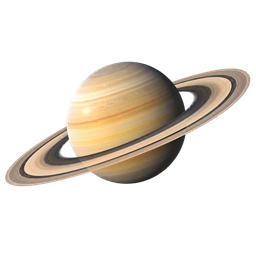
- Saturn often looks pale yellow and less bright than Jupiter.
Planets and stars are different
Stars are distant suns that produce their own light. Planets are much closer worlds that shine mainly by reflecting sunlight. From Earth, planets also change position against the more distant background stars.
Bright stars
Sirius, Vega, and Arcturus are useful bright stars to learn. Betelgeuse and Rigel stand out in Orion. Which stars are visible depends on your location, the season, and the time of night.
Constellations and patterns
Constellations are named patterns that help people recognize parts of the sky. Orion's three-star belt and the Big Dipper pattern, part of Ursa Major, are familiar examples. Their positions appear to change through the night and across the seasons.
The North Star
In northern locations, Polaris is the North Star. It appears nearly still while nearby stars seem to circle around it during the night. Polaris points roughly north, but it is not the brightest star in the sky.
How sailors used the sky
Before electronic navigation, sailors used the Sun and recognizable stars to keep direction. In the Northern Hemisphere, Polaris helped them find north, and its height above the horizon helped them estimate latitude. Navigators in other regions used different star patterns and horizon observations.
Why stars twinkle
Moving layers of air bend starlight by tiny, changing amounts, making a star seem to flicker or shift color. Planets often look steadier because their small visible disks average out more of that atmospheric shimmer.
Seeing more of the night sky
A darker location reveals fainter stars. Give your eyes time to adjust, avoid bright screens, and look when clouds, haze, and moonlight are limited. A clear horizon also makes low planets and stars easier to find.